Honest status
Who is the keeper of the plan?
A short test for finding the one person accountable for a delivery — and what to do when the answer is nobody.
3 min read
Here is the test.
Who gets asked "where are we on this?" — and has to have an answer?
Not who would know if they looked. Not who is on the RACI. Who gets asked, and cannot say "let me check with the team" twice without it becoming a problem for them personally.
That person is the keeper of the plan. Run the test on your three most important deliveries this week. The results are usually uncomfortable.
The three failure patterns
Nobody. The most common outcome in matrixed organisations. Several people hold pieces; no one holds the whole. Everyone can answer about their part, which means nobody is wrong, which means nothing gets escalated until a date is missed. The plan has no keeper and behaves exactly as you would expect an unowned thing to behave.
Three people. Worse than nobody, because it looks fine on the org chart. The account manager thinks the delivery manager owns it. The delivery manager thinks the technical lead owns the dependency. The technical lead thinks they were told it was descoped. Shared accountability is a phrase organisations use when they do not want to choose.
The sponsor. An executive who funds the work and gets asked about it in board meetings. They are accountable in a governance sense, but they do not open the tool on a Tuesday and they cannot see the state of the work without someone preparing it for them. Naming the sponsor as the keeper means your visibility problem is now also a seniority problem.
The keeper is not the most senior person
It is the person closest to the work who can still see all of it.
In a services business that is usually the implementation lead or delivery manager. In a product business it might be the programme manager. In customer success it is whoever owns the account's outcome rather than its relationship. The job title varies; the position does not. Close enough to know, senior enough to act, singular enough to be asked.
What a keeper needs from you
One name, written down. Not implied by the org chart. Written on the project, visible to the customer, and the same name that appears on the status report.
The right to say red. If turning a project amber requires a keeper to first survive a conversation about why it is amber, you have priced honesty out of the market. The keeper must be able to raise a flag without it being read as a confession.
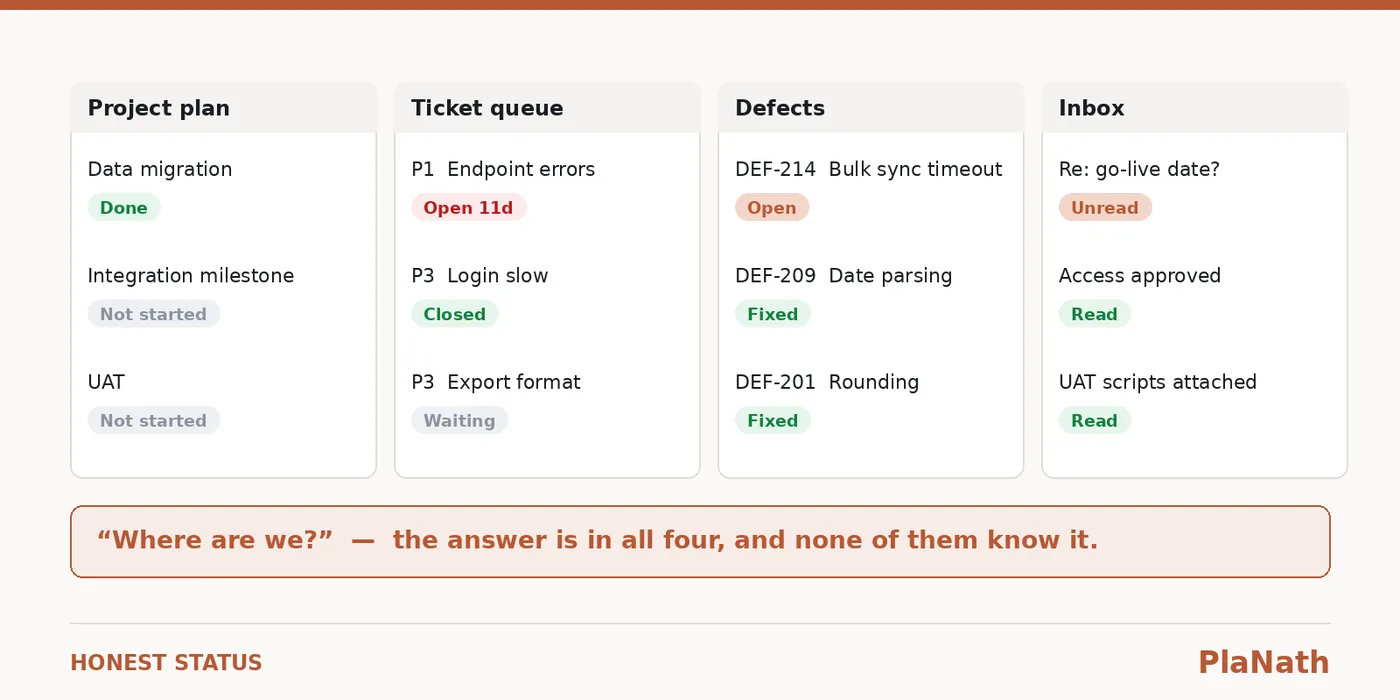
A true picture, on demand. This is the one that is almost always missing. A keeper who has to spend fifteen minutes assembling an answer from four systems will, under pressure, start estimating instead. That is not a character flaw; it is arithmetic about their week.
Escalation that goes somewhere. A keeper who raises a risk three times and watches nothing happen will stop raising risks. You will not be told when this happens.
The software question
None of this is solved by buying a tool. Accountability is an organisational choice and the tool cannot make it for you.
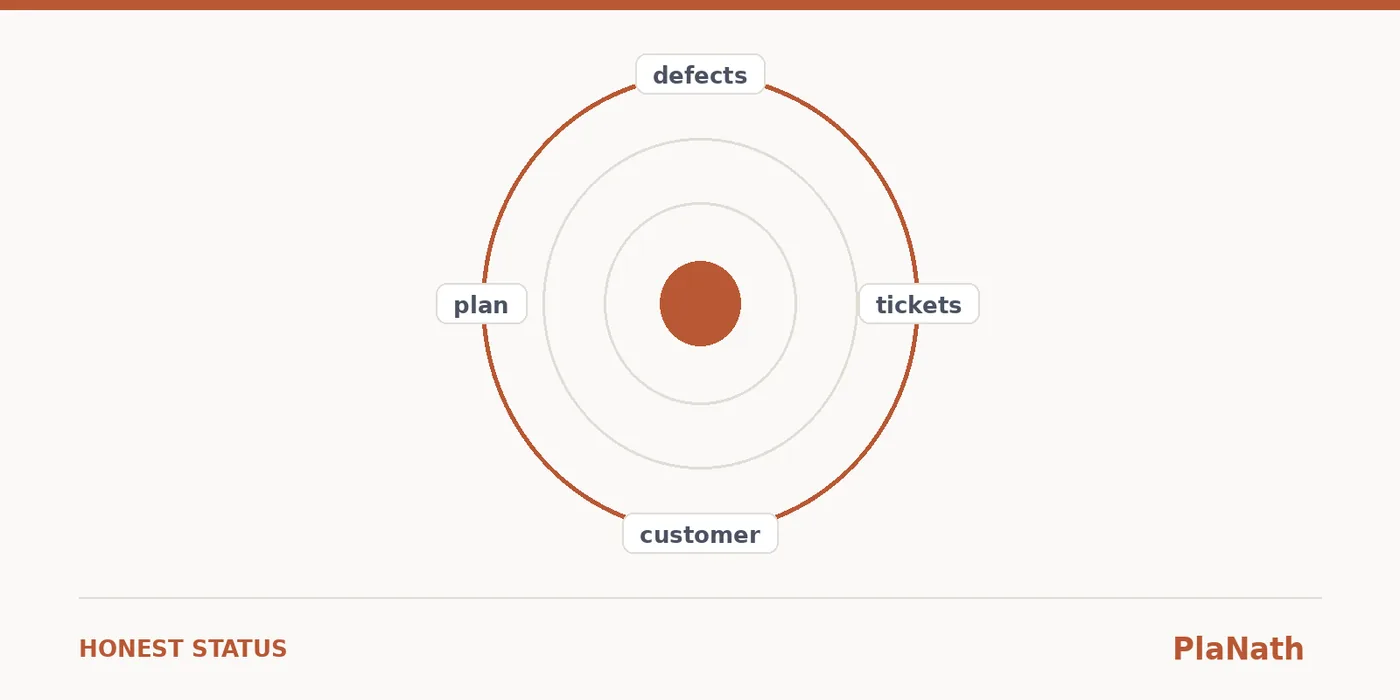
What a tool can do is remove the excuse. When the keeper can see the plan, the tickets, the defects and the customer's temperature in one place, "I did not know" stops being an available answer — for them, and for everyone above them.
That is the narrow, honest claim PlaNath makes. It does not own your outcome. It makes sure the person who does is never the last to know.
PlaNath makes sure the person accountable is never the last to know. planath.com
Start free trial