Honest status
Every plan is written in the future tense
Why plans do not move themselves, and what has to happen for one to start.
3 min read
Look at any roadmap, any implementation schedule, any commitment made to a customer in a room full of people nodding.
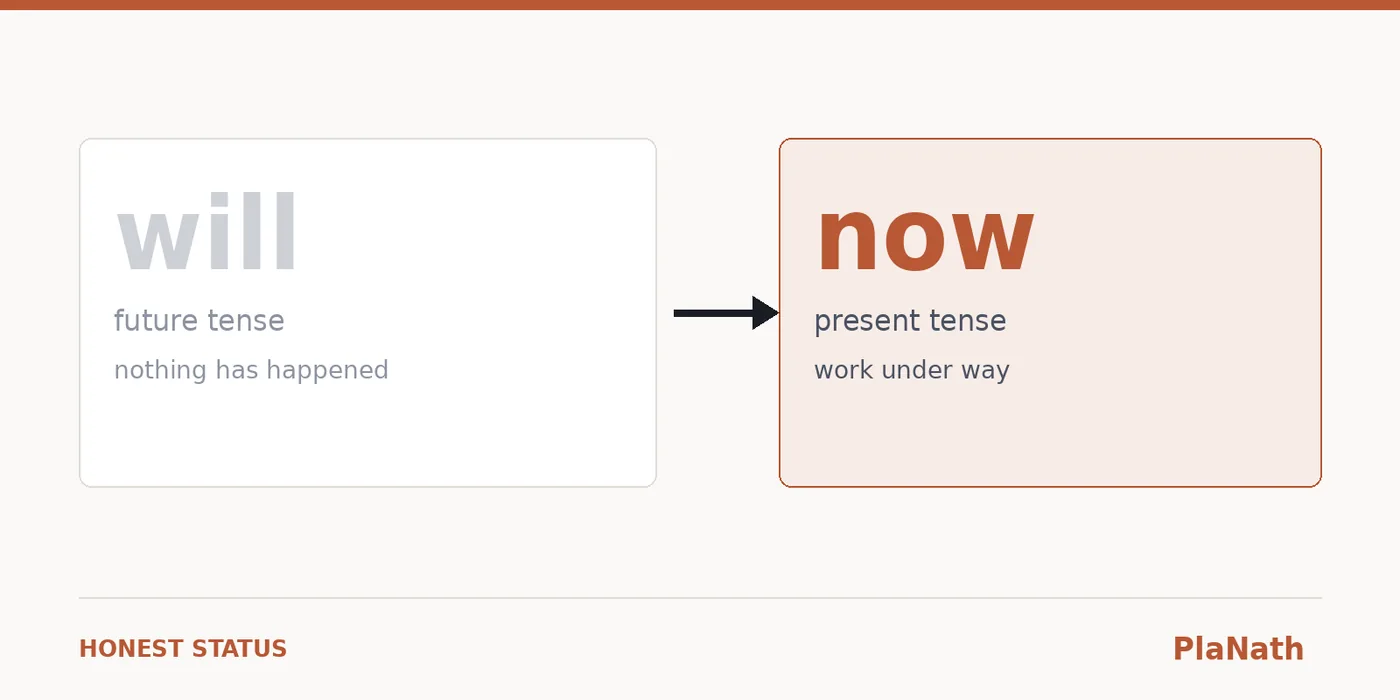
Every line is a sentence about what *will* happen. We will ship. We will migrate. The customer will go live on the fourteenth.
The tense is the problem. Nothing written in the future tense has occurred, and nothing in it can occur, because the future tense is where work goes to be agreed with and postponed.
A plan is a promise, not preparation
This distinction sounds like semantics until you watch it play out.
If a plan were preparation, then finishing the plan would move you closer to the outcome. It does not. A beautifully structured plan and a scribbled one are exactly equally far from done: zero percent. The work has not started in either case.
What a plan actually is, is a promise — a set of commitments made by people to other people, recorded so they can be checked later. And a promise, on its own, does nothing at all.
This is why planning theatre is so seductive. It feels like progress, it produces an artefact, and it can be presented. It is also the only phase of delivery where nothing can go wrong, which is a large part of why organisations spend so long in it.
Something has to change the tense
Moving a plan from future to present is never done by a process, a template or a tool. It is done by a person.
Specifically, it is done by the person who picks the plan up and carries it — who answers when it slips, whose name is on it when the date arrives, who gets asked "where are we?" and has to have a reply. Every functioning delivery has one. Every failing one is usually missing them, or has three of them, which is the same thing.
That person needs two things, and organisations reliably provide only the first.
They need authority, which most get, at least nominally.
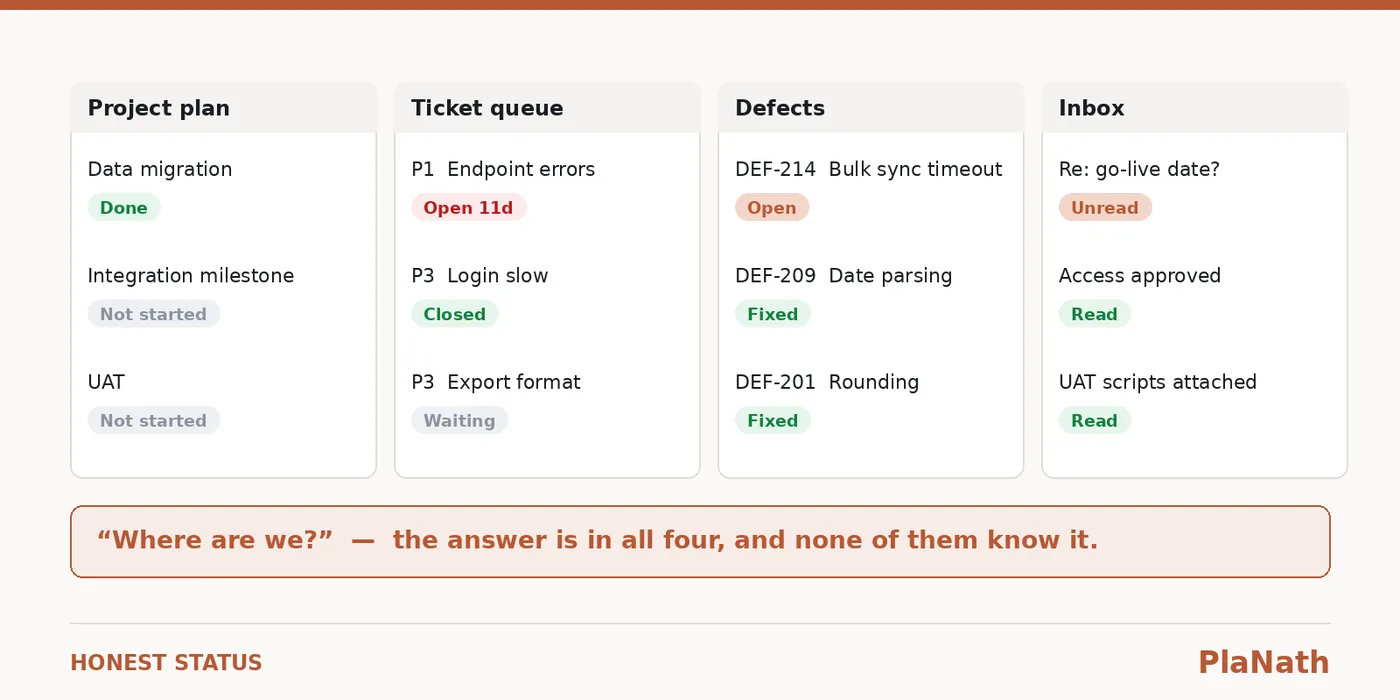
And they need visibility — a true picture of where the work actually stands, available at the moment they are asked rather than assembled over fifteen minutes from four systems. This is the one nobody provides, and then everyone is surprised when accountability does not produce results.
You cannot be accountable for something you cannot see. Accountability without visibility is just blame with a job title.
What the tool is for
Not for owning the outcome. Software does not deliver projects, and your buyers know it — which is why every tool that has claimed otherwise is met with a shrug by anyone who has actually run a delivery.
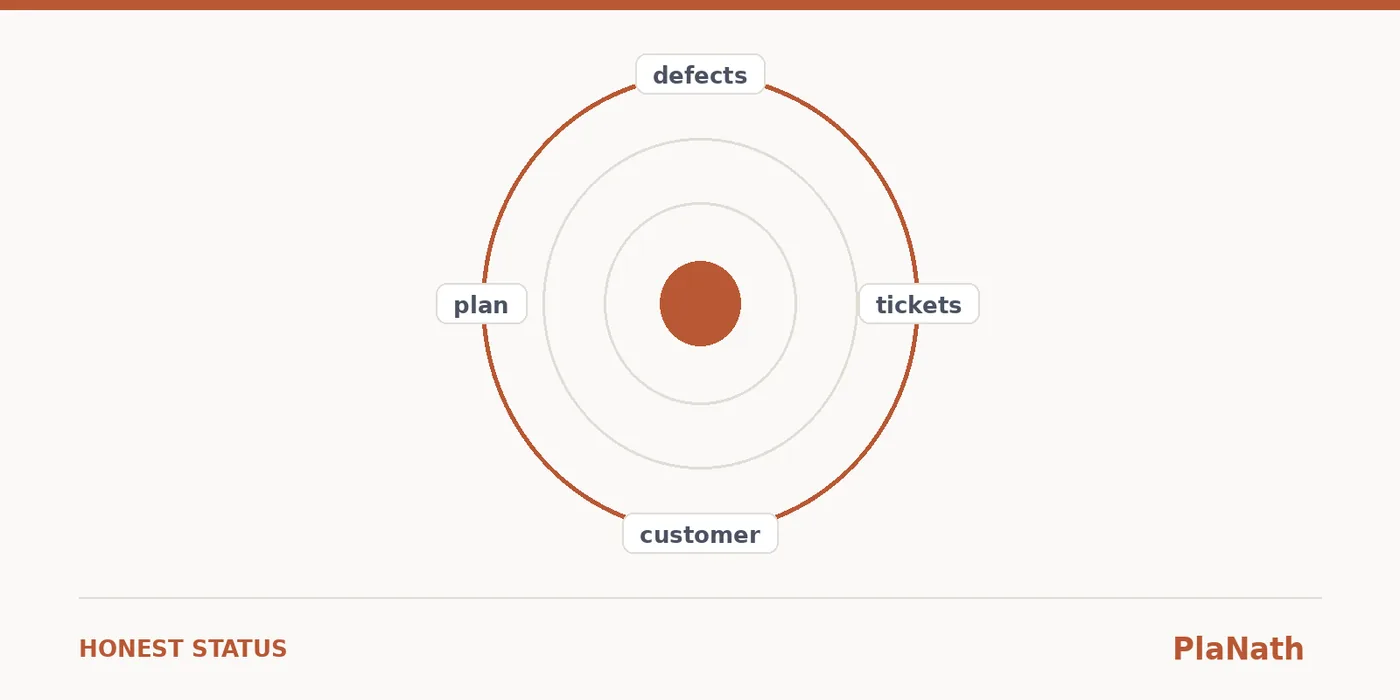
The tool's job is narrower and more useful: to make sure the person who is accountable always has a true answer. To hold the plan, the tickets, the defects and the customer's state together. To flag what has gone stale. To refuse to present a comfortable number that is hiding something.
That is the division of labour PlaNath is built around. You answer for the plan. PlaNath answers for the picture. The name carries it — *plan*, the English word for what you bring; *nath*, Sanskrit for the keeper that holds it and answers for its true state; and inside the same word *ath*, from *atha*, "now", because the only status worth having is the one that is true as you are looking at it.
Now the plan begins.
PlaNath — now the plan begins. planath.com
Start free trial