Implementation
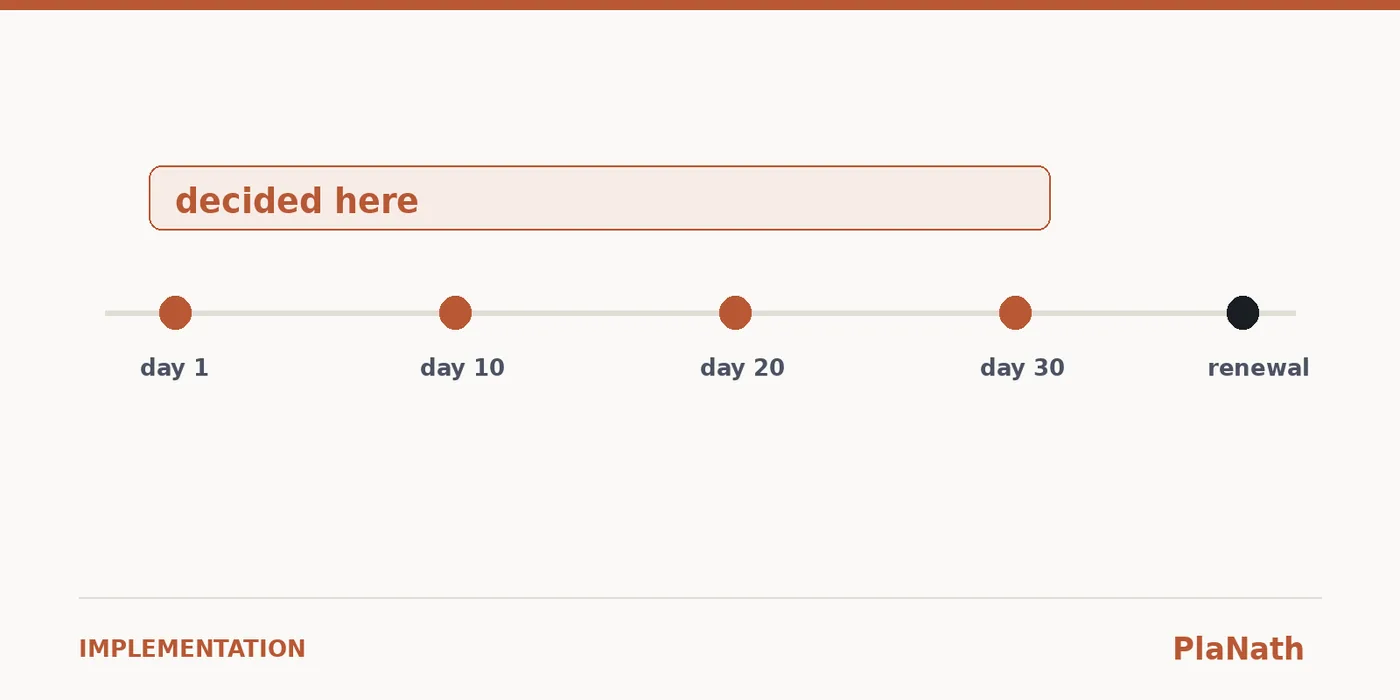
The first thirty days decide the renewal
Implementation is not a cost centre. It is the only part of the customer lifecycle where you can still change the outcome cheaply.
4 min read
Most companies treat implementation as the bit between the contract and the revenue. Something to get through, staffed by whoever is free, measured on hours consumed.
Then they build a customer success function to handle retention, and wonder why it spends most of its time repairing impressions formed months before it was involved.
What the customer is deciding in month one
They are not evaluating your software in the first thirty days. They already bought it. They are evaluating whether they made a good decision — which is a different question, and they answer it from evidence that has almost nothing to do with your feature set.
They notice whether your kick-off matched what the salesperson described. Whether the person running the project knew what was agreed in the deal. Whether you asked for the same information twice. Whether the first date you committed to was met. Whether, when something slipped, they heard it from you or discovered it themselves.
Every one of those is an implementation behaviour, and every one of them is forming the answer to a question they will not be asked out loud for eleven more months.
The handoff is where it goes wrong
The single most damaging moment in most customer lifecycles is the transition from sales to delivery.
The deal contains commitments — scope, timelines, the specific thing the buyer's boss was promised. Some of it is in the contract. A great deal of it is in a call recording, a follow-up email, and the salesperson's memory.
Delivery starts with the contract and a handover meeting. What was said in the room, and what the customer believes was agreed, arrives partially or not at all. The customer then asks for something in week three that everyone on your side experiences as a new request and they experience as the thing they bought.
That mismatch does not feel like a system problem. It feels like a difficult customer. It is almost always a handoff problem.
Three things that fix more than they should
Start the project record at the deal, not at the kick-off. If the customer record, the commitments and the eventual project live in the same system, the delivery team inherits context instead of reconstructing it. This is unglamorous and it removes an entire category of week-three arguments.
Standardise the playbook, then let the project vary. Most implementations of the same product are 80% identical. Teams rebuild that 80% each time because the 20% is different and it feels like every customer is bespoke. A standard workplan template with defined variation points collapses elapsed time dramatically — my own experience running implementations was a reduction from around three months to two weeks, almost entirely from removing re-invention rather than working faster.
Make time-to-first-value the headline metric. Not go-live. Not project closure. The date the customer first does something useful with the thing they bought. It is the number that correlates with renewal, and it is usually not on anyone's dashboard.
Why this is a tooling question as well as a process one
You can run all of this on spreadsheets and goodwill, and plenty of good teams do. What breaks is scale: the moment you are running eleven implementations at once with four people, the invisible ones stop being invisible only when they are already late.
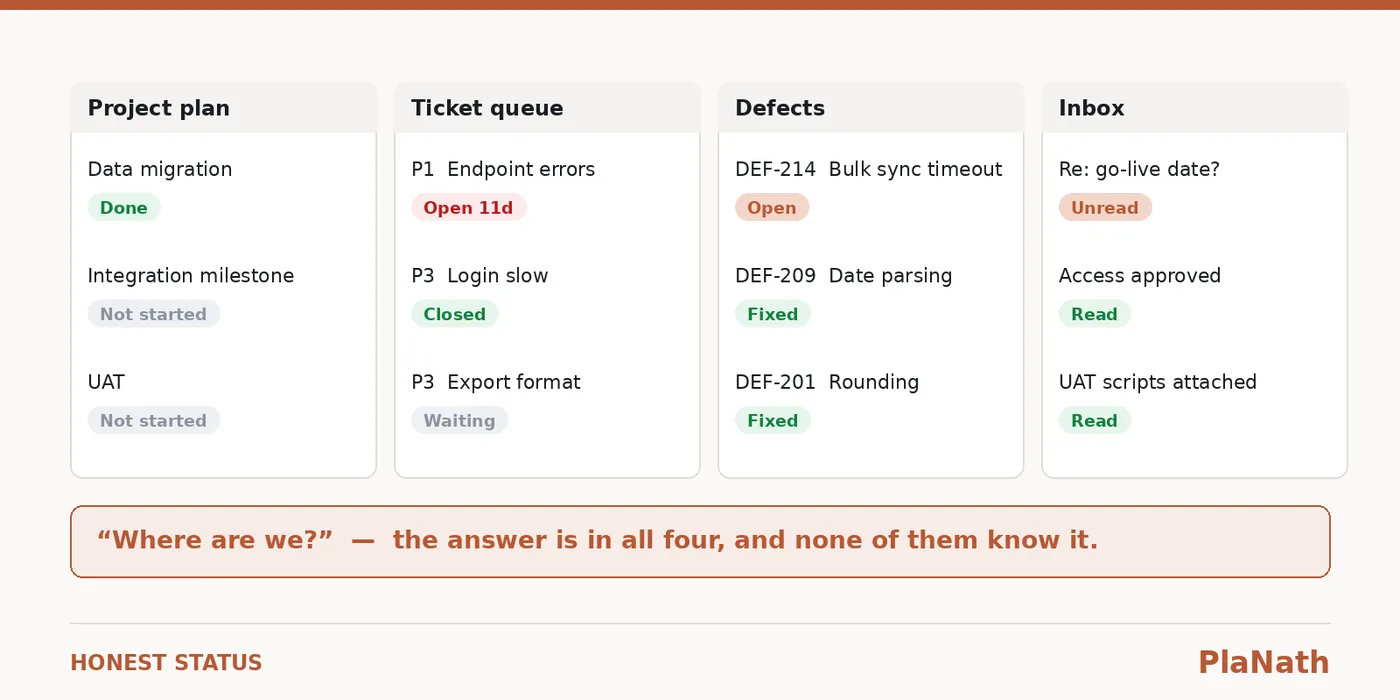
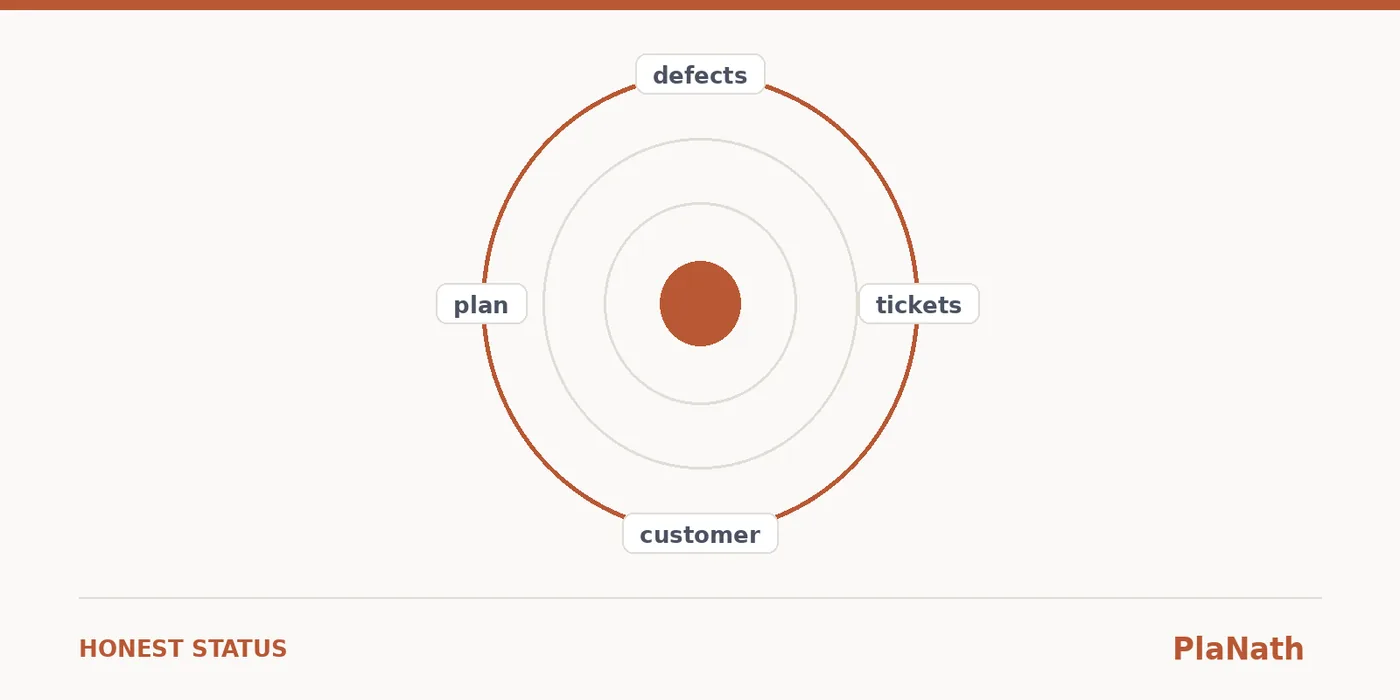
What helps is having customer, project, workplan, defects and support in one place — so that a customer who is quiet, a plan that has not moved, and a ticket nobody has resolved are all visible as one picture rather than three unrelated facts in three systems.
That is the workflow PlaNath is built around: customer → project and workplan → defect management → customer success handoff. Not four tools bolted together. One path, with the same customer record underneath it.
The renewal conversation happens in month eleven. It is decided in month one.
PlaNath runs customer, project, defects and CS handoff as one path. planath.com
Start free trial