Customer success
The QBR you can prepare in twenty minutes
If preparing a quarterly review takes two days, the problem is not the review.
3 min read
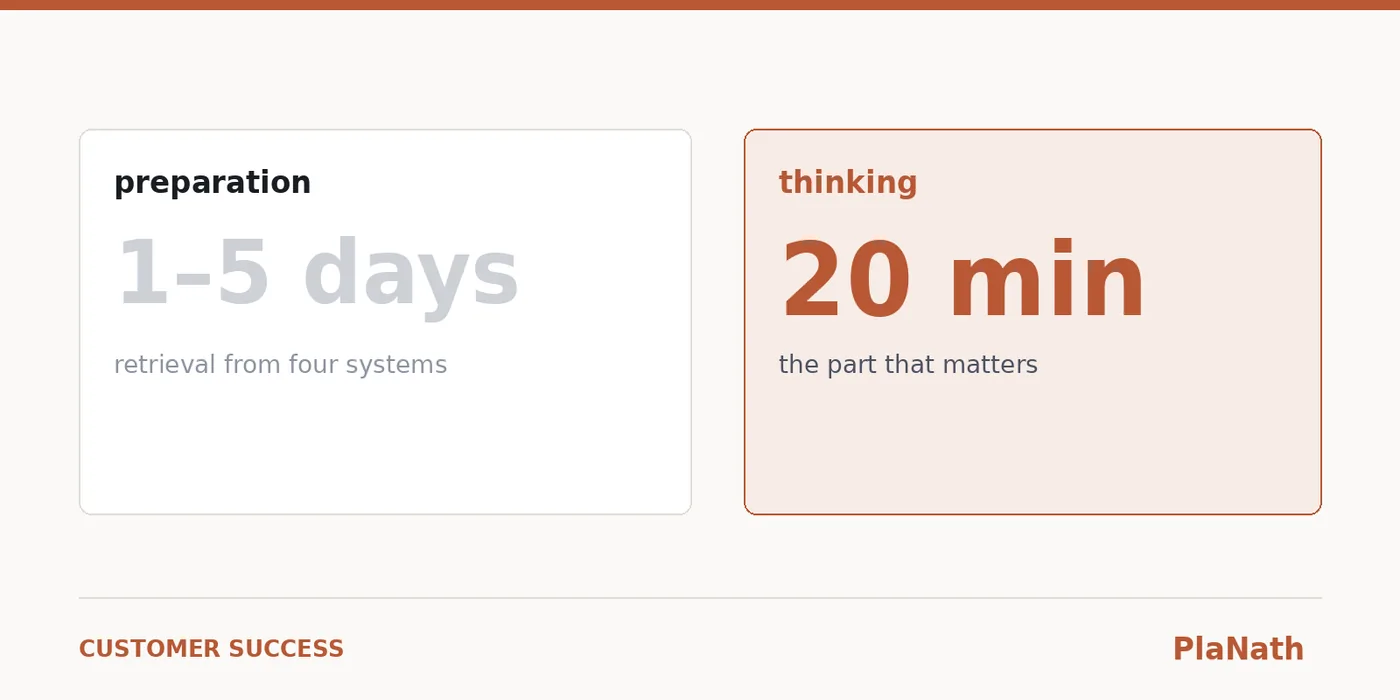
Ask a customer success manager how long a QBR takes to prepare and you will hear something between a day and a week. Almost none of that is thinking. It is retrieval.
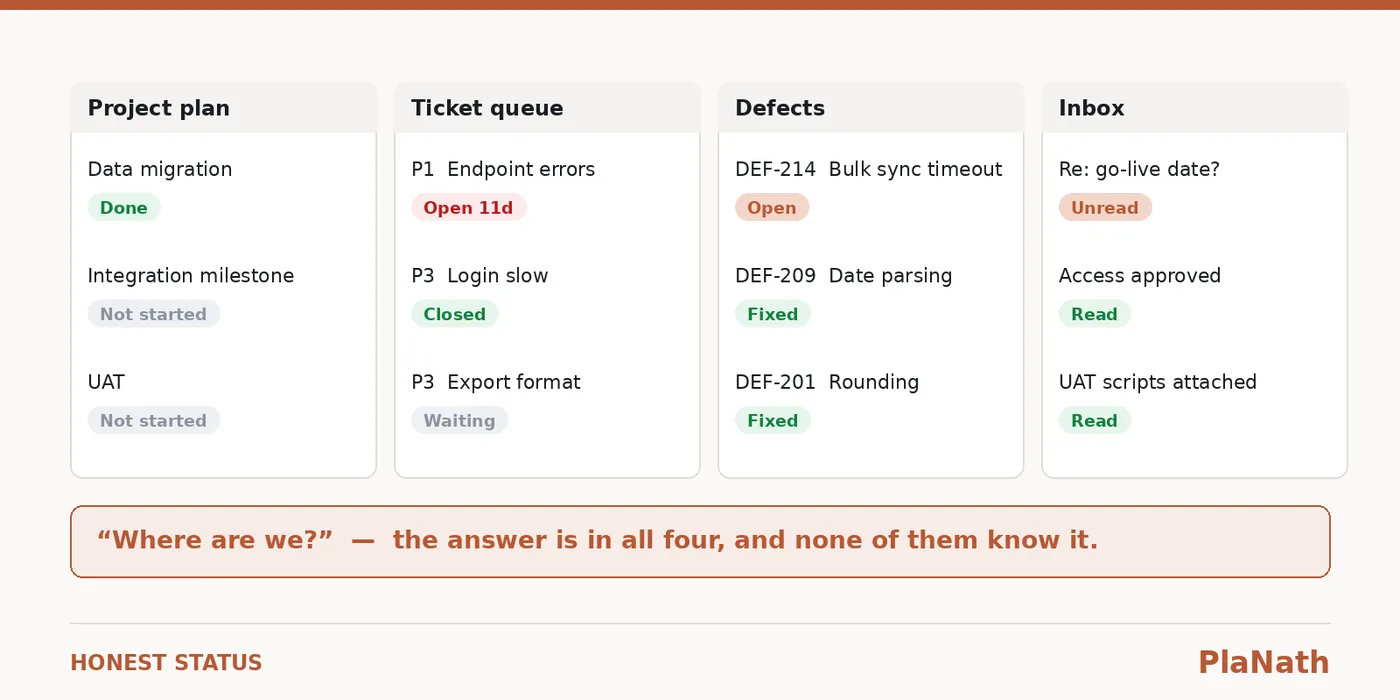
Pulling ticket stats from the support tool. Chasing the delivery team for project status. Finding what was promised last quarter, which is in an email. Building a slide that says what has happened since, which requires knowing what happened.
The thinking — what should we recommend, what is the risk, what do we ask for — takes twenty minutes. The other day and a half is archaeology.
What a QBR actually needs to contain
Strip away the template and there are five things a customer wants from the meeting:
What we said we would do, and whether we did it. Commitments from the last review, with outcomes. This is the trust section. Skipping it, or presenting it selectively, is noticed.
What has gone wrong, and what we did about it. Incidents, escalations, anything that took too long. Raising these yourself is the single highest-value thing you can do in a QBR, because the alternative is them raising it, which changes the meeting from a review into a complaint.
What they are getting out of it. Adoption and outcomes in their terms, not your feature names.
What is coming. Roadmap items relevant to them specifically. Not the full roadmap.
What we are asking for. Every QBR should have an ask — a reference, a case study, an introduction, a decision, an expansion conversation. A review without an ask is a status update with catering.
Notice that three of those five are pure retrieval from systems you already run.
Why retrieval is hard
Because "the customer" means something different in each system.
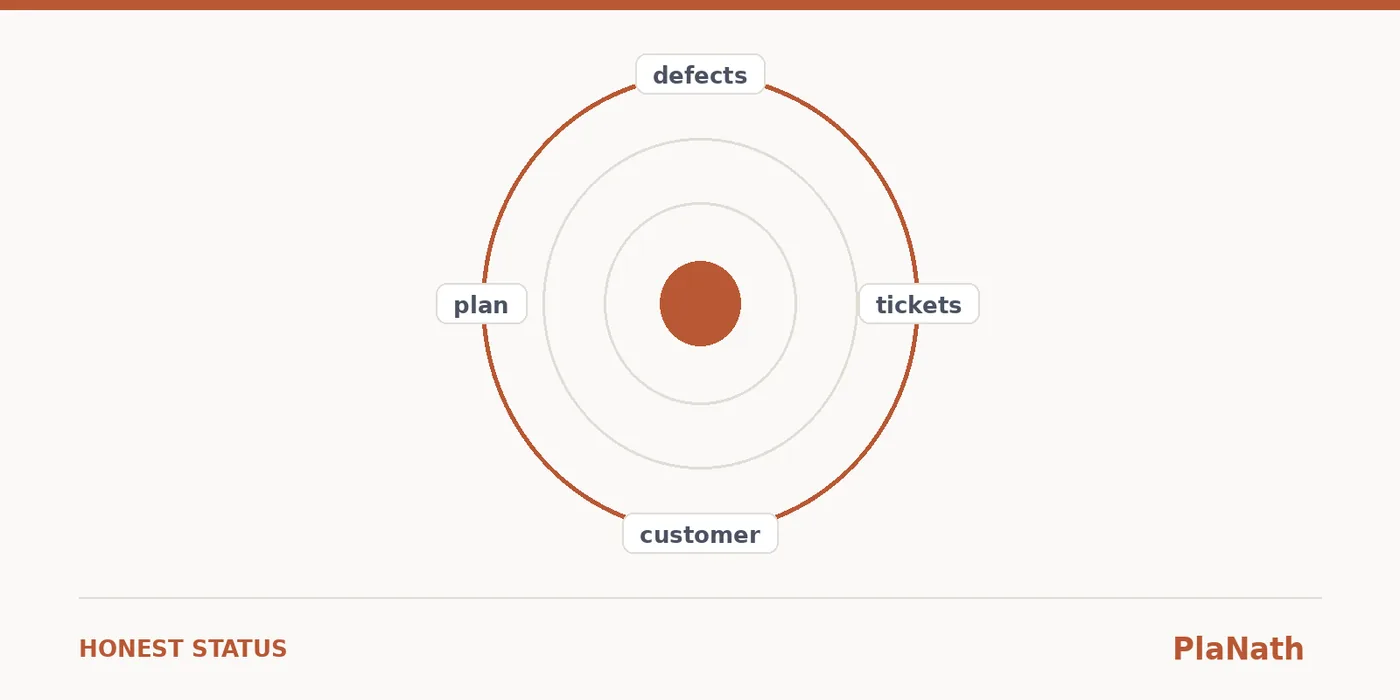
In the support tool they are an organisation with a domain. In the project tool they are a project with a code. In the CRM they are an account with an owner. The join between them is a human who knows all three.
So the CSM spends a day being that join, every quarter, per account. At ten accounts that is ten days a quarter of senior time spent copying between systems.
The test
Pick your most important account. Time how long it takes you to answer these, right now, without asking a colleague:
- How many escalations have they raised this quarter, and how long did each take to close?
- What did we commit to at the last review?
- Which of their projects are open and what state are they in?
- When did someone from their side last contact us, and who?
If that takes more than a few minutes, your QBR cost is structural. No amount of template improvement will touch it.
What fixes it
Only one thing: the customer being a single record that the projects, the workplan, the defects, the tickets and the escalations all attach to. Then preparation is reading rather than assembling, and the CSM spends their day on the twenty minutes that actually matter.
That is how PlaNath is built — one customer record, with delivery and support hanging off it rather than beside it. It will not write your recommendation. It will stop you spending a day earning the right to make one.
PlaNath hangs delivery and support off one customer record. planath.com
Start free trial